A Transfer Student's Perspective
My junior year of high school was filled with uncertainty about who I wanted to be beyond the walls of my high school and what I wanted to pursue for my future career. At such a young age, I found it difficult to sit down and think to myself, “What am I passionate about and how can I get there?” I think societal expectations place significant pressure on high school students to leave their hometowns and move toward a traditional typical college experience, something many of us anxiously anticipate during our senior year of high school.
However, as junior year ended and senior year was in full swing, I was introduced to the idea of community college. My first immediate thought was “But that is not the traditional route my peers take,” as if community college was something to be ashamed of. I sat with the idea for a while until it clicked that community college could be the right fit for me. I recall walking through Lone Star College’s Tomball campus to meet with an advisor, scared of what was waiting for me behind those doors. There was still one lingering question during this process, which was to figure out what I wanted to major in. The advisor surprised me by saying that most of the students at community college were in the same situation as me.
I enrolled in a summer introduction course (EDUC 1300) prior to starting classes in the fall of 2022. The purpose of this class was to ensure a smooth transition into higher education courses and manage college and career planning. Part of this course included taking a career exploration quiz and a Myers-Briggs Type Indicator test. It felt as though everything in this class had finally provided the answers to the questions I had carried for years. As soon as that class ended, I went to the advising office to declare my degree – associate of arts in teaching – and was excited about this journey. During my time at community college, I was invited to be a part of Phi Theta Kappa, an international honor society. I contributed 15 hours of my last semester in Lone Star’s Service-Learning Program, where my classroom instruction in early childhood education led to project-based work in my community and graduated Summa Cum Laude. Looking back at all these opportunities offered during my time at community college, I can see that they were experiences preparing me for success.
When the time came to find a four-year university to transfer to, I had so many questions and did not know where or to whom to turn. I dedicated a lot of time and effort to navigating the transfer process. Once I decided which university to transfer to, I spent countless nights reviewing my transcripts and cross-referencing all my coursework with the university’s degree plan to ensure my classes aligned with the requirements for transfer. The Texas Transfer Framework, offered by the Texas Higher Education Coordinating Board (THECB), alleviated my stress and answered a question I am sure many transfer students have asked themselves: “How will my classes transfer and fit into the new university degree plan?” After navigating obstacles such as determining what credits would transfer and what housing options were for transfer students, I was excited to finally begin that college experience I had looked forward to.
After all that time and effort, my transfer process was a success. I am now a senior at The University of Texas at Austin, where I am pursuing a bachelor’s degree in Bilingual and Bicultural Education. I am also earning a double minor in Educational Psychology and Rhetoric & Writing. Part of me wishes I could have completed my bachelor’s degree at my community college because of the close-knit community it offered. Recently, Lone Star College and other community colleges across Texas have begun offering certain bachelor’s degree programs, creating more opportunities for students to receive a four-year degree while continuing in this familiar environment.
My piece of advice for students who are worried about taking this unfamiliar and untraditional step of community college and transferring is to remember that they are not alone. I have met numerous individuals who went through the same process as me, and it is nice to have a community where our experiences are similar. Another piece of advice for students in this potential transfer process is to take advantage of dual credit courses offered in high school as that will get them ready for the college coursework routine. I also wish resources such as the Career Explorer tool offered through My Texas Future had been available for me, as it helps students filter their potential career choices by selecting their desired median salary, relevant areas of study and even the county they wish to work in. Additionally, ADVi has become a big part of our high school seniors’ and adult learners’ process, and I would have used this resource while navigating the transfer process. Lastly, I would have enjoyed Free College Application Week, offered by the THECB; it has become a resource for many going through the application and transfer process, because the financial burden of college applications can limit students’ potential for attending their dream school.
All in all, I could not have been more grateful for the opportunity to attend community college first and go against this taboo assumption that has been present for a long time. My mission as an intern at the THECB and as a future educator is to push against societal norms and advocate for students to consider the endless possibilities that come with receiving an education, even if it means deviating from the traditional route.
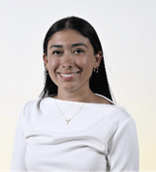 Ariana Alarcon is a student intern at the Texas Higher Education Coordinating Board, where she began her work assisting the Instructional Design team and reviewing content for the Texas OnCourse Academy, ensuring it was accessible for all users. She then transferred to the ADVi team, where she shared her transfer experience with her colleagues to identify gaps involving advising resources for transfer and prospective transfer students; she has also created resources for military-bound students.



